Santa, Shrooms, and the Magic of Amanita Muscaria

The Santa Shaman Theory
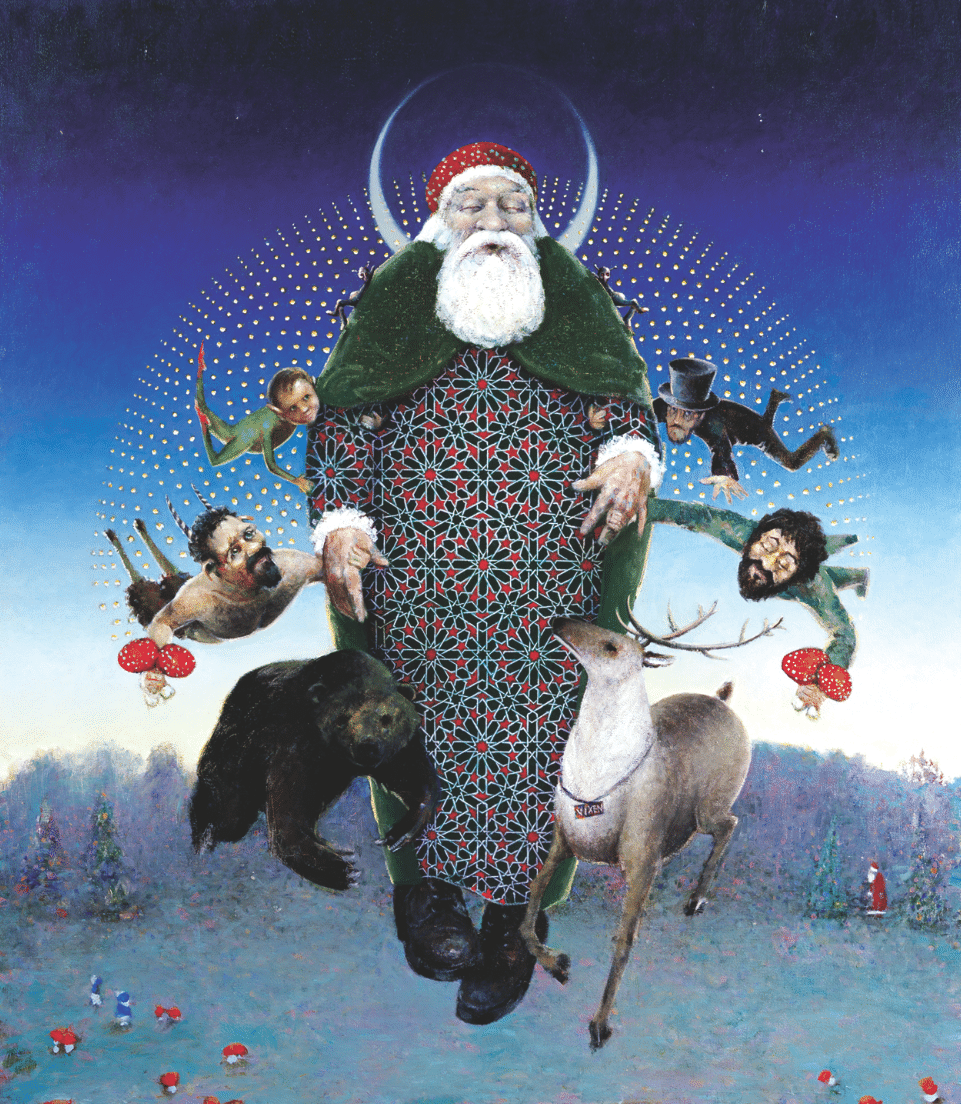
Could Santa Claus have been a psychedelic mushroom-eating shaman from the Arctic? That’s not just a wild theory—it’s an idea backed by anthropologists, mycologists, and cultural historians alike. The indigenous Sami people of Lapland, a frigid region in northern Finland, have long used Amanita muscaria in sacred healing rituals.
Dressed in red-and-white robes, much like the mushroom itself, Arctic shamans would visit families on the Winter Solstice, bearing gifts of wisdom and spiritual insight. But with heavy snow blocking doorways, these medicine men had to find another way in—through the chimney. They were welcomed with food, shared their knowledge, and when their work was done, they left on their reindeer-drawn sleds. Sound familiar?
The Magic Behind Amanita Muscaria
Beyond folklore, Amanita muscaria has captured the interest of modern researchers. While it contains psychoactive compounds like muscimol and ibotenic acid, early evidence suggests that, when prepared properly, it may have therapeutic benefits. Traditional cultures have used it for relaxation, dream enhancement, and pain relief. Some speculate that, in controlled doses, it could support mental clarity and spiritual exploration.
From Shaman to Shopping Malls
The parallels between Santa and Amanita muscaria don’t end with shamans. European Christmas cards from the 1800s often depict red-and-white mushrooms under Christmas trees, hinting at a long-lost connection. Even our modern holiday traditions—stockings by the fireplace (like mushrooms drying by the hearth), gift-giving, and reindeer with a little extra lift—all seem to echo the ancient relationship between humans and these mystical fungi.
Of course, the Santa Claus we know today has many influences, from Saint Nicholas to the marketing genius of 20th-century advertisers. But isn’t it fun to imagine that, beneath all the tinsel and capitalism, the real magic of Christmas might just be a mushroom-fueled vision quest?